Evaluating Roofing Logo Design Assets: A Practical Guide for Contractors and Creatives
Establishing a strong visual identity is a critical step for roofing contractors, construction firms, and creative professionals working within the home improvement sector. When discussing Roofing Logo Design, the conversation often splits into two distinct paths: commissioning a custom illustration from scratch or utilizing pre-made digital graphic assets. For many business owners and designers, the latter option offers a compelling balance of cost-efficiency, speed, and versatility. Understanding the nuances of these digital resources—specifically those provided in comprehensive file packages containing SVG, EPS, JPG, and PNG formats—is essential for making an informed decision about your brand's visual future.
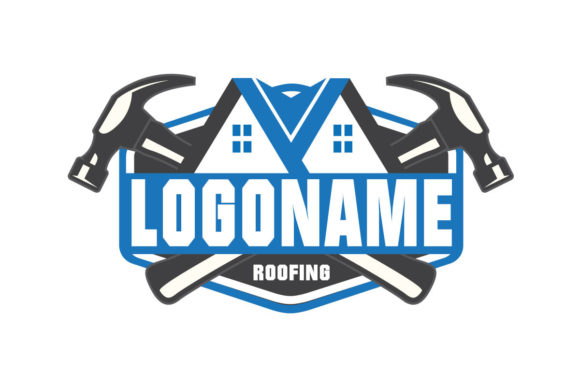
A high-quality roofing logo serves as the cornerstone of trust. In an industry where reliability and durability are paramount, your logo must communicate stability. Digital graphic elements designed for this niche typically feature iconography such as shingles, hammers, house silhouettes, or protective shields. What makes a dedicated Roofing Logo Design asset distinct from generic construction graphics is the specific attention to architectural details and industry-standard symbolism. These designs are engineered to resonate immediately with homeowners looking for repair or installation services, bypassing the need for complex explanation.
The Value of Multi-Format Digital Packages
When evaluating digital resources for branding, the file formats included in the download are just as important as the aesthetic appeal of the design itself. A robust package for a roofing logo should not be limited to a single image type. Professional utility requires a suite of files to ensure the logo performs well across various mediums, from massive billboard advertisements to small social media profile pictures.
Consider the inclusion of an SVG file (Scalable Vector Graphics) in your asset bundle. This format is indispensable for modern web design and digital applications. Unlike raster images, SVGs use mathematical paths to define shapes, meaning they can be scaled infinitely without losing resolution or becoming pixelated. For a roofing company maintaining a responsive website, an SVG ensures the logo looks crisp on a smartphone screen just as it does on a desktop monitor. Furthermore, SVGs often have smaller file sizes, which can contribute to faster page load times—a factor that influences search engine rankings and user experience.
Equally critical for print professionals is the EPS file (Encapsulated PostScript). Saved typically in Adobe Illustrator version 10 or higher for maximum compatibility, the EPS format is the industry standard for vector printing. If you intend to place your logo on work uniforms, vehicle wraps, or large-scale signage, an EPS file allows sign makers and printers to manipulate the vectors without degrading quality. This flexibility is a significant advantage over raster-only options, which can become blurry when enlarged beyond their original dimensions.
Raster Options: JPG and PNG Use Cases
While vector files handle scaling, raster files like JPG and PNG serve specific, immediate needs. A high-resolution JPG file at 300 DPI (dots per inch) is ideal for standard printed materials where transparency is not required, such as flyers, brochures, or business cards with a solid background color. The 300 DPI resolution ensures that the print output remains sharp and professional, avoiding the fuzzy edges that plague low-resolution web images.
However, the PNG file with a transparent background is often the most versatile tool in the kit for day-to-day operations. Because the background is removed, this file type can be overlaid onto any colored surface, textured photo, or digital template without a white box appearing around the logo. This is particularly useful for creating estimates, adding watermarks to project photos, or designing social media graphics where the background varies. Having both 300 DPI versions ensures that whether the medium is digital or physical, the quality remains consistent.
Comparing Pre-Made Assets vs. Custom Commissioning
One of the primary decisions a business owner faces is whether to purchase a pre-made Roofing Logo Design package or hire a designer for a bespoke creation. Both approaches have merit, but they serve different stages of business growth and budgetary constraints.
Custom Design: Hiring a professional graphic designer to create a logo from scratch offers total uniqueness. You own the copyright entirely, and the design is tailored specifically to your brand's personality. However, this route is significantly more expensive, often costing hundreds or thousands of dollars, and involves a longer turnaround time due to revisions and communication loops. It is best suited for established corporations with specific branding guidelines and larger marketing budgets.
Pre-Made Digital Assets: Conversely, purchasing a digital graphic package provides immediate access to professional-grade design at a fraction of the cost. The trade-off is that the base design is not exclusive; other entities could theoretically purchase and use the same graphic. However, the value lies in the ability to customize. With the included AI, EPS, and SVG files, a user with basic design knowledge (or a local printer) can alter colors, fonts, and layout to create a semi-custom look. This approach is ideal for startups, solo contractors, or side businesses that need a polished look quickly to begin marketing efforts.
Versatility Beyond Branding: Expanding Use Cases
A common misconception is that these digital graphics are solely for corporate logos. In reality, the utility of a high-quality roofing graphic extends far beyond letterheads and truck decals. The inclusion of varied file types unlocks a wide range of creative applications for both commercial and personal projects.
For those in the graphic and web design field, these assets can be integrated into broader layouts for client websites or marketing campaigns. The clean lines of vector roofing icons make them excellent candidates for stationery suites, including invoice templates and estimate forms. Additionally, the imagery translates well to invitations cards and announcements for industry events, ground-breaking ceremonies, or open houses for newly completed projects.
The craftsmanship involved in these designs also lends itself to handmade craft items and wall art. Using the SVG or EPS files with cutting machines (like Cricut or Silhouette), crafters can create vinyl decals for helmets, stencils for painting, or decorative signs for home offices. The high-resolution PNG and JPG files are perfect for printed paper items such as party decor for construction-themed events or educational materials for trade schools. This adaptability increases the return on investment for the initial purchase, allowing the asset to generate value across multiple touchpoints.
Decision Factors: When to Choose This Route
Determining if a pre-made Roofing Logo Design is the right choice depends on your specific requirements for exclusivity, budget, and timeline. If your primary goal is to launch a business quickly with a professional appearance while keeping overhead low, this is likely the optimal path. The ability to edit the files using Adobe Illustrator or compatible software means you are not locked into a static image; you retain the agency to tweak the design as your brand evolves.
However, if your business strategy relies heavily on being the sole proprietor of a unique trademarked symbol, you may eventually need to transition to a fully custom solution. Yet, even in that scenario, pre-made assets can serve as excellent placeholders or supplementary graphics for secondary marketing materials where exclusivity is less critical.
It is also vital to consider your technical capabilities. To fully leverage the EPS and SVG files, some familiarity with vector editing software is beneficial. If you lack these skills, you will need to rely on a print shop or a freelance editor to make modifications. If you prefer a "drag-and-drop" simplicity without any editing, the JPG and PNG files will suffice for most standard applications, though you will lose the ability to scale indefinitely or change individual design elements.
Making an Informed Choice
In the competitive landscape of the roofing industry, first impressions matter. Your visual identity is often the first interaction a potential client has with your business. Whether you choose to build a brand around a custom illustration or adapt a high-quality digital asset, the key is consistency and clarity. A well-chosen Roofing Logo Design package, complete with SVG, EPS, JPG, and PNG formats, provides a flexible foundation. It empowers you to produce everything from handmade cards to large-scale party decor and professional web design elements without breaking the bank.
By understanding the strengths and limitations of each file format and honestly assessing your need for exclusivity versus speed, you can select a resource that aligns with your business goals. For many, the practicality of a multi-format digital download offers the perfect blend of professional quality and operational flexibility, serving as a reliable tool in the broader toolkit of business development.