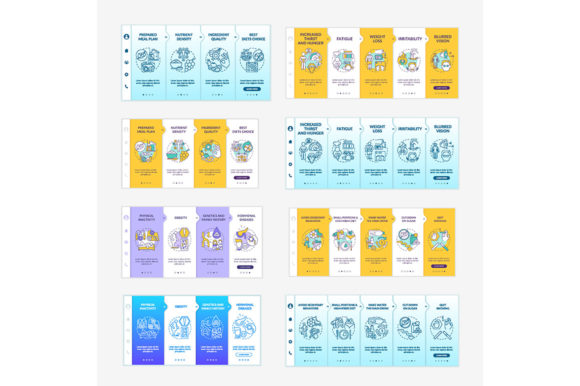
Mastering Patient Education with the Diabetes Effect Onboarding Template Set
Managing a chronic condition like diabetes requires more than just medical intervention; it demands a fundamental shift in lifestyle, daily habits, and long-term planning. For healthcare providers, app developers, and health educators, the challenge often lies not in the lack of information, but in how that information is delivered. When a patient receives a diagnosis, they are frequently overwhelmed by complex terminology and abstract concepts. This is where the Diabetes Effect Onboarding Template Set becomes an invaluable resource. By transforming dense medical data into visual, digestible, and engaging narratives, this template set bridges the gap between clinical advice and patient understanding.
The journey from diagnosis to management is fraught with emotional and logistical hurdles. Patients often struggle with the "why" and "how" of their new reality. They need to understand the mechanics of insulin resistance, the importance of glucose monitoring, and the impact of genetics without feeling alienated by sterile charts or intimidating text blocks. The primary goal for any digital health solution or educational brochure in this space is to reduce anxiety while increasing compliance. A well-structured onboarding process can determine whether a patient feels empowered to take control of their health or defeated by the complexity of the disease.
Addressing the Communication Gap in Diabetes Care
One of the most significant barriers in diabetes care is communication fatigue. Traditional methods of educating patients—such as lengthy pamphlets or verbal explanations during short appointments—often fail to stick. Patients leave the office confused about their medication schedules, dietary restrictions, or the significance of their family history. The Diabetes effect onboarding vector template addresses this by breaking down the learning curve into manageable, visually appealing segments.
Consider the scenario of a mobile health application designed for newly diagnosed Type 2 diabetics. Without a clear onboarding flow, users might delete the app after the first login due to information overload. By utilizing a structured template, developers can guide users through a logical progression. The template allows for the segmentation of content into distinct phases: understanding the diagnosis, recognizing symptoms, learning about genetic factors, and establishing a management routine. This approach respects the user's cognitive load, ensuring that each piece of information is absorbed before moving to the next.
A Visual Walkthrough: The Four-Step Screen Strategy
The core strength of this template set lies in its four-step screen architecture, designed specifically for responsive mobile websites and applications. This structure mimics the natural learning process, guiding the user from awareness to action.
Step One: Recognition and Empathy. The first screen typically focuses on validating the user's experience. Using soft, approachable linear illustrations, this section acknowledges the confusion and fear that often accompany a diagnosis. It sets a tone of support rather than judgment. Icons here might represent common symptoms or emotional states, helping the user feel seen and understood immediately.
Step Two: The Science Simplified. The second screen dives into the mechanics of the disease but avoids heavy jargon. Here, the concept of blood sugar regulation is explained through clear infographics. Instead of complex biological pathways, the template uses simplified visuals to show how food converts to energy and where the process breaks down in diabetes. This is where the "Diabetes Effect" is visualized, making the invisible visible.
Step Three: Genetics and Family History. A unique and critical component of this template set is its dedicated focus on genetics and family history. Many patients are unaware of the hereditary nature of diabetes or how their family tree influences their risk profile. The template utilizes a specific color concept to highlight these connections. Warm, earthy tones might represent lineage, while cooler tones indicate environmental factors. Linear illustrations depict family trees or DNA strands in a non-threatening way, encouraging users to reflect on their history without inducing fatalism. This section is crucial for prompting users to gather family medical data, which is vital for personalized care plans.
Step Four: Action and Management. The final screen transitions from knowledge to practice. It outlines the immediate next steps: monitoring, diet, exercise, and medication. Icons representing healthy food, activity trackers, and pill organizers provide a clear roadmap. This screen serves as the call to action, empowering the user to start their journey with confidence.
Versatility Across File Formats and Platforms
Flexibility is key when implementing educational tools across different mediums. The Diabetes Effect Onboarding Template Set is available in a comprehensive range of file formats, including JPEG, AI, PNG, EPS, and SVG. This variety ensures that whether you are a graphic designer creating a high-resolution print brochure or a UI/UX designer building a scalable mobile interface, the assets fit your workflow seamlessly.
For web developers, the SVG format is particularly advantageous. These vector files remain crisp at any resolution, ensuring that the linear illustrations and icons look perfect on everything from a small smartphone screen to a large desktop monitor. The scalability supports responsive design principles, allowing the layout to adapt fluidly to different device orientations without losing detail. Meanwhile, the AI and EPS files offer full editability for designers who need to customize colors, adjust typography, or modify illustration elements to match specific brand guidelines. If quick deployment is needed, the ready-to-use PNG and JPEG files allow for immediate integration into presentations, social media campaigns, or email newsletters.
Tailoring the Approach for Different Users
Different stakeholders will utilize the Diabetes Effect Onboarding Template Set in unique ways to meet their specific objectives.
- Healthcare Providers: Clinics and hospitals can use these templates to create patient intake materials. By handing a tablet to a waiting patient with the four-step walkthrough pre-loaded, staff can ensure consistent education before the doctor even enters the room. This saves time and improves the quality of the consultation.
- App Developers: For those building mHealth solutions, the template provides a ready-made UX framework. Instead of spending weeks designing an onboarding flow from scratch, developers can integrate these screens to accelerate time-to-market while ensuring the user experience is grounded in best practices for health literacy.
- Non-Profit Organizations: Advocacy groups can leverage the infographic elements to create awareness campaigns. The clear visual language makes complex statistics about diabetes prevalence and genetic risks accessible to the general public, aiding in fundraising and community outreach efforts.
Implementation Considerations and Best Practices
While the template provides a robust foundation, successful implementation requires thoughtful customization. It is essential to align the content with current medical guidelines and local healthcare standards. The text within the templates should be reviewed by medical professionals to ensure accuracy. Furthermore, accessibility should be a priority. When customizing the color concepts, ensure there is sufficient contrast for users with visual impairments. The linear illustrations should be accompanied by alt text in digital formats to support screen readers.
Another consideration is cultural relevance. Diabetes affects diverse populations differently, and family structures vary globally. The "Genetics and Family History" section, in particular, should be adaptable to reflect different family dynamics and cultural attitudes toward heredity and health. The editable nature of the AI and SVG files makes this localization straightforward.
Why BSD Studio is Your Partner in Health Design
Creating effective health communication materials requires a blend of aesthetic appeal and functional clarity. You can count on BSD Studio in your search for icons, brochure templates, infographic elements, mobile app screen pages, and so much more. Their commitment to providing high-quality, versatile design assets empowers creators to focus on what matters most: improving patient outcomes.
By integrating the Diabetes Effect Onboarding Template Set into your projects, you are not just choosing a design; you are choosing a strategy for better engagement. Whether you are launching a new app, redesigning a clinic's educational resources, or creating a public health campaign, these tools provide the structure needed to turn confusion into clarity. In the fight against diabetes, clear communication is a powerful tool, and with the right templates, you can ensure that every patient starts their journey with the knowledge and confidence they need to succeed.