Unlocking Creativity: The Ultimate Guide to Playground Slide Vector Graphics for Web and Animation
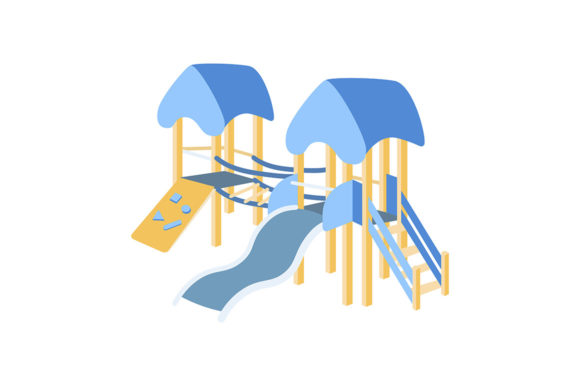
In the vibrant world of graphic design, few elements evoke such immediate nostalgia and joy as the playground children slide. Whether you are designing a website for a local kindergarten, creating an animated explainer video about childhood development, or building assets for a mobile game, the visual representation of play is crucial. However, finding the right asset can be a challenge. This is where the concept of a playground children slide flat object and its corresponding flat color vector formats becomes indispensable for modern creators.
This article explores the significance of these digital assets, explaining why they are preferred over traditional photography or complex 3D renders in many contexts. We will delve into the technical advantages of vector files like EPS, the versatility of JPGs, and how these isolated cartoon illustrations fit seamlessly into the broader ecosystem of web graphic design and animation.
Understanding the Flat Design Aesthetic in Play Equipment
To truly appreciate the value of a flat color vector object, one must first understand the design philosophy behind it. "Flat design" is a minimalist approach that emphasizes usability and clarity. It strips away unnecessary textures, gradients, and shadows that mimic real life, focusing instead on bold colors, simple shapes, and clean typography.
When applied to a kindergarten equipment isolated cartoon illustration, this style offers several distinct benefits:
- Clarity at Any Size: Because flat designs rely on solid blocks of color and defined lines, they remain legible whether viewed on a massive billboard or a tiny smartphone screen.
- Faster Load Times: For web designers, performance is key. Flat vector graphics typically have smaller file sizes compared to high-resolution photographs, ensuring that websites load quickly—a critical factor for SEO and user retention.
- Universal Appeal: The simplified nature of flat art transcends cultural barriers. A colorful slide looks inviting to children and parents regardless of their background, making it perfect for global brands.
A playground children slide flat object is not just a picture; it is a stylized representation of child amusement activities. It captures the essence of fun without the visual noise of a cluttered background, allowing designers to place the object anywhere within a layout without worrying about conflicting lighting or perspective issues.
The Technical Power of Vector Formats (EPS)
When downloading resources for professional projects, you will often encounter ZIP files containing multiple formats, most notably EPS (Encapsulated PostScript) and JPG. Understanding the difference between these two is vital for maximizing the utility of your assets.
The EPS file is the crown jewel for graphic designers. Unlike raster images (which are made of pixels), vector files are mathematical equations that define lines and curves. This means a playground children slide flat color vector object saved as an EPS can be scaled up to the size of a building or down to the size of a favicon without losing a single ounce of quality. There is no pixelation, no blurriness—just crisp, clean edges.
- Editability: With an EPS file, you can open the artwork in software like Adobe Illustrator or CorelDRAW and change the colors instantly. Does your client want the slide to match their brand's specific shade of blue? With a vector, this takes seconds.
- Layer Separation: High-quality isolated illustrations often come with separated layers. You might be able to move the ladder independently from the slide chute, adding a layer of interactivity to your animations.
- Print Readiness: If your project moves from the web to print brochures or large banners, the EPS format ensures the output remains sharp and professional.
For those new to design, think of the EPS file as the "master copy." It holds all the potential variations of the image, ready to be molded to fit any creative need.
Practical Applications in Web Design and Animation
Why do professionals specifically seek out kindergarten equipment isolated cartoon illustrations? The answer lies in their versatility across various media platforms. In the context of web graphic design, these assets serve as more than just decoration; they are functional tools for storytelling.
Consider a landing page for a new daycare center. Using a generic stock photo of a playground might feel impersonal or cluttered. However, placing a bright, cheerful flat color vector of a slide next to your call-to-action button creates a friendly, approachable atmosphere. It signals safety and fun immediately. Furthermore, because the object is "isolated" (meaning it has a transparent background), it integrates perfectly with any background color or pattern you choose.
Bringing Static Images to Life through Animation
The true magic of these assets shines in the realm of animation. Modern web trends favor micro-interactions and motion graphics to engage users. A static image of a child sliding is nice, but an animated sequence where a character slides down, laughs, and jumps off is unforgettable.
Because vector objects are composed of distinct paths and shapes, they are ideal for rigging and animating. Software like Adobe After Effects can import EPS files and manipulate individual parts. You can make the slide wobble slightly when a child lands, or create a parallax effect where the slide moves at a different speed than the background clouds. This level of dynamism transforms a simple childhood memory into an engaging digital experience.
Examples of practical usage include:
- Educational Apps: Teaching children about physics or social skills using animated characters on playground equipment.
- Safety Campaigns: Creating clear, easy-to-understand infographics about playground safety rules using flat icons.
- Gaming Assets: Using 2D vector sprites as backgrounds or interactive elements in casual mobile games focused on kids.
Clarifying Common Misunderstandings
Despite their popularity, there are some common misconceptions regarding playground children slide flat objects and vector graphics in general.
Misconception 1: Vectors look too simple or childish.
While flat design is often associated with cartoons, it is a sophisticated stylistic choice used by major tech companies and financial institutions. The simplicity is intentional, designed to reduce cognitive load for the viewer. When executed well, a flat slide illustration looks modern and polished, not amateurish.
Misconception 2: JPGs are sufficient for everything.
Many beginners rely solely on the JPG included in the ZIP file because it opens in any viewer. While JPGs are great for quick previews or use in PowerPoint presentations where editing isn't required, they lack the scalability and editability of the EPS. Relying only on JPGs limits your ability to adapt the design for high-resolution prints or complex animations later on.
Misconception 3: Isolated means it has a white background.
In professional terminology, "isolated" specifically means the object has been cut out from its background, usually resulting in a transparent canvas (often saved as PNG or within the EPS). This allows the designer to place the slide over a grassy field, a starry sky, or a solid color block without a white box surrounding it.
The Broader Context: Childhood and Digital Representation
Beyond the technical specs, these graphics play a role in how we digitally represent childhood and child amusement activities. In an increasingly digital world, the playground remains a potent symbol of freedom, physical activity, and social interaction. By using high-quality, cheerful illustrations of this equipment, designers help bridge the gap between the physical world of play and the digital spaces where families now spend much of their time researching schools, buying toys, or planning parties.
Moreover, the availability of these assets in convenient ZIP files containing both EPS and JPG formats democratizes design. It allows small business owners, teachers, and independent developers to access professional-grade visuals without needing to hire an illustrator from scratch. This accessibility fosters creativity and enables more people to tell stories about the importance of early education and play.
Conclusion
The playground children slide flat object is far more than a simple clip-art image. It is a versatile, powerful tool in the arsenal of modern graphic designers and animators. By leveraging the scalability of vector formats and the clarity of flat design, creators can produce work that is not only visually stunning but also highly functional across web and print media.
Whether you are building an educational platform, animating a storybook, or designing a brand identity for a childcare facility, understanding how to utilize these isolated cartoon illustrations will elevate your projects. Remember to always look for the EPS file for maximum flexibility, and don't be afraid to experiment with colors and motion. In the end, these digital slides help us celebrate the universal joy of childhood, one pixel and path at a time.
As you continue your journey in design, keep in mind that the best assets are those that serve a purpose. A well-chosen slide illustration doesn't just fill space; it invites the viewer to play, learn, and imagine. So, unzip that file, open your design software, and let your creativity slide into action.