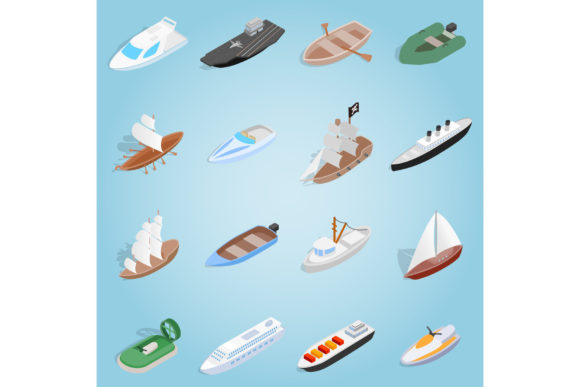
Elevating Digital Interfaces with Isometric 3D Ship Set Icons
In the rapidly evolving landscape of web and mobile user interface design, visual communication has become more critical than ever. Designers are constantly searching for assets that not only convey information clearly but also add a layer of depth and engagement to their projects. This is where the Ship Set Icons, Isometric 3d Style becomes an invaluable resource. Unlike flat, two-dimensional graphics, isometric illustrations provide a sense of volume and perspective that can make complex logistics, travel, or maritime concepts instantly understandable and visually appealing. Whether you are building a dashboard for a global shipping company, designing a travel booking app, or creating educational materials about naval history, utilizing a high-quality set of basic ship elements vector illustration can transform the user experience.
The primary challenge many designers face is finding iconography that strikes the right balance between aesthetic flair and functional clarity. Standard flat icons often lack the detail necessary to distinguish between different types of vessels, such as cargo freighters, cruise liners, tugboats, or naval destroyers. When users cannot quickly identify the specific type of ship represented, the utility of the interface diminishes. Furthermore, maintaining a consistent visual language across a project is difficult when sourcing individual icons from disparate libraries. A cohesive Isometric ship set icons collection solves this by ensuring that every element shares the same lighting, angle, color palette, and level of detail. This consistency is vital for establishing trust and professionalism in digital products.
Addressing Design Challenges with Depth and Clarity
One of the most significant hurdles in UI design is representing three-dimensional real-world objects on a two-dimensional screen without losing recognizability. Traditional top-down or side-view icons can sometimes feel abstract or overly simplified. The Ship Set Icons, Isometric 3d Style addresses this by utilizing an axonometric projection that mimics 3D space while remaining perfectly aligned with grid-based layouts. This style allows viewers to see the top, front, and side of a vessel simultaneously, providing immediate context about the ship's structure and purpose.
For developers and designers working on logistics platforms, the need to differentiate between various stages of the supply chain is paramount. A generic boat icon simply does not suffice when you need to illustrate the difference between a container ship waiting at port and a tanker in transit. By employing a comprehensive set of basic ship elements vector illustration, teams can create intuitive visual narratives. For instance, a delivery tracking app can use specific isometric icons to show the exact mode of transport at each leg of the journey, reducing user confusion and support queries. The added depth of the 3D style draws the eye and makes interactive elements feel more tactile and engaging, encouraging users to explore the interface further.
Practical Applications Across Industries
The versatility of Universal ship icons to use for web and mobile UI extends far beyond the maritime industry. While obviously essential for shipping companies, port authorities, and naval organizations, these assets are equally valuable in sectors like tourism, gaming, and education. In the travel sector, a booking engine can use distinct isometric icons to help users filter results by vessel type—separating luxury cruises from budget ferries or private yachts. This visual differentiation speeds up the decision-making process for the customer, directly impacting conversion rates.
In the realm of strategy games or simulation apps, the aesthetic quality of assets is a major factor in user retention. An Isometric ship set icons package provides game developers with ready-to-use assets that fit seamlessly into isometric game worlds, saving hundreds of hours of modeling and rendering time. Similarly, educational platforms teaching geography or history can use these detailed illustrations to make lessons more immersive. Instead of static text descriptions, students can interact with 3D-style representations of historical vessels, fostering a deeper connection to the material.
Furthermore, these icons are highly effective in data visualization. Dashboards displaying global trade routes, fleet management statistics, or environmental impact reports benefit greatly from the clarity of isometric graphics. When complex data is paired with recognizable, high-quality imagery, stakeholders can grasp trends and anomalies much faster. The ability to toggle between different views or highlight specific ship elements allows for dynamic storytelling with data, turning dry spreadsheets into compelling visual reports.
Technical Flexibility and File Formats
A crucial consideration for any professional designer is the flexibility of the asset files. A robust Ship Set Icons, Isometric 3d Style collection should never limit your workflow. The ideal package includes a variety of formats such as JPG, EPS, AI, PSD, and PNG. Each format serves a specific purpose in the design and development pipeline. For instance, AI (Adobe Illustrator) and EPS files are vector-based, meaning they can be scaled to any size without losing resolution. This is essential for responsive web design, where icons must look crisp on everything from a small smartwatch screen to a large desktop monitor.
On the other hand, PSD (Photoshop) files offer layer control, allowing designers to tweak colors, shadows, and highlights to match a specific brand identity. If your client requires a navy blue fleet instead of the standard grey, having access to layered PSDs makes this customization straightforward. For immediate implementation in web prototypes or mobile apps, high-resolution PNG files with transparent backgrounds are indispensable. They allow for drag-and-drop integration into tools like Figma, Sketch, or Adobe XD. Even JPG formats have their place for quick previews or non-transparent background needs in presentations. Having access to all these formats ensures that the set of basic ship elements vector illustration adapts to your needs, not the other way around.
Tailoring the Approach for Different Users
Different professionals will approach the implementation of Isometric ship set icons in unique ways based on their specific goals. A UX designer focused on usability might prioritize the clarity and distinctiveness of each icon, ensuring that a cargo ship is never mistaken for a submarine. They will likely focus on how these icons guide the user through a flow, using them as signposts in a complex navigation structure. Their success metric is reduced cognitive load and faster task completion.
Conversely, a brand designer or art director might focus on the stylistic cohesion of the Ship Set Icons, Isometric 3d Style. They will look at how the lighting and texture of the ships align with the overall brand personality. Is the brand playful and vibrant, or serious and industrial? They may use the editable vector files to recolor the entire set, adding gradients or textures that reinforce the brand's visual identity. For them, the icons are not just functional markers but key components of the brand's emotional resonance.
Developers, meanwhile, will appreciate the technical optimization of the assets. They need files that load quickly to ensure high performance on mobile networks. A well-structured set of Universal ship icons to use for web and mobile UI will be optimized for file size without sacrificing visual quality. Developers might also look for consistency in the bounding boxes of the icons to simplify CSS styling and alignment within grid systems.
Making the Right Choice for Your Project
When selecting a graphic resource, it is important to look beyond the initial visual appeal and consider the long-term utility of the asset. A high-quality Isometric ship set icons collection is an investment in the scalability of your design system. As your project grows, you may need to add new features or expand into new markets. Having a versatile library of maritime assets means you can easily extend your interface without breaking visual consistency.
It is also worth considering the future of display technology. With the rise of high-DPI screens and retina displays, vector-based assets are becoming increasingly necessary. Raster images that look fine today may appear pixelated tomorrow. By choosing a set of basic ship elements vector illustration that includes native vector formats like AI and EPS, you future-proof your designs. You ensure that your interface remains sharp and professional regardless of the device used to access it.
In conclusion, integrating Ship Set Icons, Isometric 3d Style into your design workflow offers a powerful solution to common UI challenges. It bridges the gap between aesthetic beauty and functional clarity, providing users with an intuitive and engaging experience. Whether you are optimizing a logistics dashboard, launching a travel app, or creating immersive educational content, these universal icons provide the foundational elements needed to succeed. By leveraging the flexibility of multiple file formats and the visual depth of isometric design, you can create digital products that stand out in a crowded marketplace. The right visual assets do more than just decorate a page; they communicate value, build trust, and guide users effortlessly toward their goals.